Post Top Ad

Post Top Ad

Showing posts with label RelayRides. Show all posts

Thursday, October 20, 2011

1:52 PM

Carsharing Update for October

I've been traveling the past month (a bicycle trip in Croatia) and there's lots to report while I was gone.  One certainly gets the impression that the carsharing industry is moving into high gear these past few months.  There's lots to report:

RelayRides and General Motors partnership — RelayRides continues with yet another very significant high-level partnership with GM's OnStar division.  This enable the OnStar telematics installed in all new GM vehicle to serve as the "on board computer" enabling them to sign up with RelayRides and immediately start renting their vehicle, nothing to install.  Vehicle owners would still have to subscribe for other OnStar services — emergency help, turn by turn navigation instructions, automatic crash response, stolen vehicle location.

This is the first announcement of what I expect to be other telematics partnerships as cars increasingly become wired.*


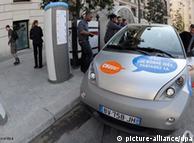
Autolib starts its shakedown in Paris — The all-electric, station-based service that's been the source of some controversy in Paris, launched at the beginning of October with 66 vehicles at 33 stations, each with 4 to 6 parking spaces.  The next major ramp up is scheduled for December with 250 of the projected 3,000 stations set to open.

Annual Autolib memberships will cost 144 €, and rates will be 5 € for every half-hour of driving — about the cost of 2 Metro tickets, as one new report observed.  Daily and weekly subscriptions will also be available for 10 and 15 € respectively with higher rates 7€ per 30 min. rates.   

New members can join using the futuristic waiting rooms (?) and will be able present and passport and credit card and activate their membership.  It's not know yet whether visitors from the US, without the European standard issue chip card, will face the same hurdle as those trying to use Velib.

Industrial giant, EV manufacturer, Bolloré, seems to be overcoming early skepticism that their BlueCar vehicle would be ready on time. They are also major investor in the project.

There are already reports that London is interested in developing their own EV carsharing service as well.

If you just can't get enough here's a short video showing the vehicles, stations etc.  

London's Streetcar begins conversion to Zipcar — The Tweets are starting to fly, preparing Streetcar (and Zipcar) members for the upcoming integration.  Rates have been published and FAQs have been written.  The challenge for Zipcar will be to keep their customers happy service as Streetcar's "home town" identity goes away.  And the usual Zipcar bells and whistles will apply — smart phone apps, phone/text reservations and reminders, etc.

Lowering the rates slightly, at least on weekdays, is a good first step. For example a VW Polo's drop from £5.25 to £5.00 per hour and daily rates drop from £52.50 to £49. VW Golf and BMW 1 series also dropped by £0.25 per hour.  Included miles increase from 20 miles per calendar day to 40 miles. Excss miles increased slightly from 23p to 25p.   Only the BMW3 series and van/transporter rates increased a tiny amount from £8.95 to £9.00 per hour.  Annual membership fee of £59.50 stays the same, as do the cost of various insurance options.  Weekend rates are £1 - £2 per hour over weekday rates.  A summary of Zipcar's London rates is here: http://www.zipcar.com/streetcar/welcome/faqs?for=rates-streetcar


A VW Up!
VW Quicar adds car rental — They haven't even launched in Hannover, Germany and VW is making a last-minute addition to the service.  In addition to the 200 Golf BlueMotions in the original announcement, VW will be adding an option for members to rent 70 other vehicles for 10 hours minimum.  Vehicles include the new VW Up! (a sub-sub compact) for ten hours starts at €30 (about $41 when this was written); a Beetle at €40 (about $54) and the Golf cabriolet or Passat for €50 (about $68).  Pricing for the core Quicar carsharing usage is €6 (about $8.25) for the first 30 minutes and €0.20 (about $0.27) for each additional minute.

Like Peugeot Mu project, this looks to me like a car manufacturer is getting into the car rental business.

Closer to home, it's worth noting that the pace of RFPs from US cities to attract carsharing services to their communities continues.  As this is written, Austin, Knoxville and Eugene have RFPs on the street.  Why Austin, you might ask? They have car2go, what more do they want?  If you find out the answer, please post the answer in a comment below.  Thanks.

Suggestion to cities evaluating the proposals - don't get hung up on the membership fees, concentrate on the package the provider offers for attracting new members - time-limited discounts off the normal application cost (to get people to join), free usage for the first trip (to get people to actually use the service).  And don't worry about the second year membership fee.  If members aren't willing to pay $50 - $75 a year for access to the vehicles, they probably aren't using them anyway — in which case, the city isn't getting much benefit from a symbolic member!

Finally, the car2go juggernaut continues with the announcement of plans to offer the "mobility on demand" service in Lyon, France.   Daimler expects the free-parking zone to be about 44 square kilometers.  The car2go operation in Lyon will be another joint-venture with Europcar, similar to the car2go service in Hamburg, Germany.

I'll be watching to see if their Smart cars face the same rebalancing challenge that the public bicycle system in Lyon, Velo' V, faces — residents regularly "clean out" certain stations on top of a hill, taking the bikes downtown and then ride the bus home in the evening rather than pedal back home.  Maybe the gas power to get them back up the hill will avoid this problem.

That's it for this month.

- Dave


------------------------
* I couldn't help but smile at a great opening line in a recent NY Times article on after-market gizmos for cars: "Cars, one of the great mobile devices to begin with, are about to get connected to the Internet like never before. It will change not just how we drive, but the economics of the car business."

Saturday, April 2, 2011

2:09 PM

The difference between car sharing and car rental


In light of several new innovations in shared vehicle services, I think it is useful to review what the essential elements of carsharing are.  And why I consider some services, often referred to as carsharing, are actually car rental.

The simplest description of carsharing that I can come up with is this:
  • Unit pricing that includes fuel and insurance
  • Unattended access to the vehicle at trip start and end
Yes, there are other characteristics of current carsharing services - membership, parking, etc. but they aren't what make carsharing distinctive.   This means that Whipcar, and now Buzzcar, don't meet a key aspect of my definition - unattended access - since both require some sort key exchange.  And for what it's worth, at the present time two current P2P start ups in the US - Getaround and Relayrides appear to have 2 classes of vehicles in the fleet - those with technology and those without.  Of course, this "unattended access" could be easily provided with a simple mechanical lockbox mounted on a wall or post near the vehicle, as a number of carsharing companies have quite successfully employed over the years.

Another innovation that's gotten some press recently is the Peugeot Mu program.  While offering a wide range of vehicle types, it, also, does not meet my definition of true carsharing since (correct me if I'm wrong someone) members have to collect the vehicle keys in person.

Why is this important?

Don't get me wrong, I think car rental serves a useful function and p2p car rental, such as Whipcar, even more so (since it uses existing vehicles more efficiently and provides a gateway into shared vehicles for die-hard "can't pry my hands off the steering wheel" car owners).

The reason I think it's important to make the distinction between carsharing and car rental is because there is a large body of research that demonstrates substantial benefits to individuals, to cities and to the environment when people join and use carsharing - fewer cars, lower VMT, etc.  I would suspect that car rental might be able to demonstrate some of these benefits, although probably to a much smaller degree, but so far these companies have not commissioned any independent studies to validate their impact.  Until the benefits of other service models are quantified, I believe it is important that cities not extend privileges, such as marketing partnership, parking benefits, etc. that have been earned by carsharing.

Friday, August 6, 2010

3:47 PM

Cambridge Mass. is Carsharing Mecca

In the beginning there was Zipcar.   And there was much rejoicing and sharing of vehicles in Cambridge.  Not surprising, since when they launched in the summer of 2000 vehicles were priced at $4.50/hr. for locations where parking was underwritten and $7/hr. where Zipcar had to pay for the parking.  In those days of yore, Zipcar had 3 chariots in Cambridge (Green/Pleasant, Harvard Square and Kendall Square),  5 in Boston and 2 in Somerville.

Last year, with little fanfare knights from an opposing kingdom, Connect by Hertz positioned 3 upscale chariots in Boston with one almost in Cambridge.  Exactly what their intentions are, remains unclear.

In the 5th month of the 10th year of the new millennium, when moon was full, upstart RelayRides set up shop, inviting vehicle owners to share their chariots with others in the kingdom and in return take a share of the harvest.  Rates were set by yon vehicle owners, ranging from $6 to $12 depending on age and category of the chariot.

Now a 4th carshare has entered the walls of Cambridge - iCar - floating down the Charles in a basket with 10 vehicles at 3 locations.  Ye iCar company offers a diverse selection of merrie chariots — from Suzuki sedans & 4wd, Nissan Cube, Toyotas and even a 15 passenger van —  but the fleete of heart and lead of foote will have to wait since, alas, they have no Mini Cooper (yet).  Chariots are in 4 categories and are priced based on several membership plans:
  • Pay Per Use — with Basic cars at $7/hr and best cars $11.25/hr.
  • Value Savings — prepaid monthly plans offering a Basic cars at $6.30 per hour (as low as $5.95/hr. if you prepay a whole bunch of hours each month)
Bundled miles range from 150 to 180 per day.  Some chariots have GPS navigation systems, others have child seats.  As with other carshares, ye householde livestock must be in a pet carrier.

iCar says its 100% woman-owned and they have more then 30 year experience in the chariot business.

Ladies (and gentlemen) get out your RFID cards and start your engines.

Sunday, May 9, 2010

9:05 PM

The other next big thing: Peer to Peer Carsharing (updated)

(This posting has been updated 10-1-2010 to reflect new information.)

A couple of months ago I had in mind 2 "next big things" - car2go and peer to peer (p2p) carsharing.  I've held off writing about p2p in anticipation that RelayRides would go live and I could talk about it as it actually works not as a hypothetical.  (Full disclosure, I'm consulting with RelayRides.)

Since then p2p carsharing and car rental has been all over the internet — Spride, Gettaround and Go-Op in the US; Whipcar and Wombat Car Club in the UK.  For what it's worth, there's a parallel movement to peer to peer car rental going on, as well — Spagg (apparently now defunct) may have been an example, and there are similar p2p car rental companies in Germany and Australia.)

What is peer to peer carsharing?  It's traditional carsharing using privately owned vehicles temporarily made available to a carsharing company for others to drive.  Like traditional carsharing the vehicles are decentralized, they're available by the hour, and they include gas and insurance in the rates (ideally full insurance coverage, not state minimum coverage).

But first, a point of clarification: some of the services that claim to be carsharing don't actually meet what I would call the minimum requirements for calling themselves carsharing — most importantly lacking "unattended access", through a lockbox or electronic technology.  If you've got to meet the owner to exchange keys at the beginning and end of the trip I just don't see how that will provide sufficient convenience of access for drivers.

Here's why I think unattended access important: if you want to  claim to be carsharing I want to be sure it will deliver the benefits that so many of us have worked so hard to establish over the years — fewer cars on the road, fewer parked cars, VMT reductions, increased use of transit, bicycling and walking. If not, why should local governments support carsharing?   Car rental, even so-called hourly car rental, has never demonstrated these benefits.

Because of the lack of unattended access, in my mind, this excludes Whipcar as real carsharing at the present time.  Fortunately, the major players all appear to be talking about some sort of technology, so, by my definition RelayRidesSprideGettaround and Go-Op are bona fide peer to peer carsharing services.  (Caveat, the functionality of the technology offered by each service could be significantly different.  )

Why is peer to peer so attractive?  

Well, it's certainly a good deal for car owners, who can easily make several thousand dollars a year from their car ("Don't work for your car, make your car work for you," as Spride says.)  Need I say more?

For the carsharing member (driver or renter in p2p terms), some adjustments will be necessary — it seems likely that in most cases instead of knowing a couple of favorite vehicle locations near your home or office, you'll have to go on the internet (or ideally smart phone) to locate the cars that are available during the timer period you have in mind; and there may be a little anxiety finding the location the first time, particularly in cities.

For the carsharing company it transforms a major expense (leasing or owning the fleet) into a variable cost that they only pay when the car is actually making money.  And, the lower cost structure means that carsharing can be feasible in less dense, more suburban locations (i.e. lower hours per day utilization), increasing the benefits of carsharing beyond the center city and close-in neighborhoods of the relatively few cities in the US that presently have carsharing.  That's the heart of why I think is peer to peer a next big thing.  

A side benefit of p2p is that, in the same way that using carsharing instead of owning a car (or 2) can be a transition to car-lite lifestyle, renting a car out to others may also serve as a transition to a car-lite lifestyle for vehicle owners.  

Why now?

Until now the hangup in getting peer to peer off the ground has been insurance. The issue has been figuring out whether there's an issue (and how to resolve it, if there is) about where/when the vehicle owner's personal auto insurance policy ends and the carsharing policy begins in the event of a claim.  Apparently, the economic climate has loosed up the insurance underwriters' grips on the reins at insurance companies.  (Whatever it takes, I guess...)

Another reason may be the explosion of interest in the iPhone and smart phones in general, which I think will make finding and booking p2p vehicles much easier and more spontaneious than having to log on to a carsharing company web site at home or work.  And, no doubt, the down turn in the economy got the juices flowing with all sort of unorthodox start ups.

Finally, in this survey of peer to peer carsharing, I would be remiss not mention the unsung pioneer in the peer to peer carsharing world: a little community car club in the UK with the unlikely name of Wombat Car Club.  They figured out the insurance years ahead of anyone else and have a very generous payment plan for car owners.  Thanks for leading the way.

Saturday, January 9, 2010

3:08 PM

Some thoughts about 2009


Welcome to the new year. Following are various thoughts about the past year (sometime dropping back a little further into late 2008). (A shorter version of this article appeared on World Streets.)

Perhaps the most important news of 2009 is to acknowledge that car sharing in North America turned 15 years old this year, thanks to Communauto - a silent leader of the industry. Congratulations Benoit, Marco and everyone there.

There continued to be a strong growth in membership in other carsharing cities.  My guess is that most companies also experienced a growth in revenues and profitability, especially Zipcar (since they haven't added any new major cities or expansion in overall fleet size (compared to where they were at the time of the Flexcar merger). I would be amazed if any carshare didn't experience an increase in vehicle utilization (hours per day) helping out the bottom line.

Campus Carsharing — What expansion that occurred in the carsharing industry was primarily in college and university carsharing services - which can be a very good deal for the carsharing companies since they usually involve a contractual arrangement with guaranteed revenues and handling of some (most) of the fleet management to the university. As has been pointed out elsewhere if you look at the budgets of higher education, they really seem to "get" the issues of transportation and are willing to do spend some money on it. Near the end of 2009, Zipcar was at more than 140 college campuses, claiming a growth of 75 percent in the past 12 months, serving a total student population of 1 million.

Meanwhile cities with revitalizing downtowns seemed to realizing that carsharing offered something of benefit and several RFPs ("request for proposals" - tenders to the rest of the world) hit the street - Miami Beach, Baltimore and Pasadena, to name a few. The usual suspects, Zipcar, Hertz Connect, U-Haul and WeCar responded. Meanwhile, in the LA basin, which once had more than 200 Flexcars, several cities are toward putting out incentives to attract carsharing - Long Beach, Santa Monica, Los Angeles city proper - as part of more comprehensive strategy to meet greenhouse gas reduction goals set by the State of California.

(Here's a special note from yours truly to cities thinking about an RFP: please don't try to ask for some sort of revenue percentage from the carshare, at least not in the first 5 years. Structure your RFP so there's as much incentive as possible to grow the service in your city. But do include definite evaluation component so you can document the value of carsharing to your city council and residents.)

Partnerships — carsharing companies made some headway in 2009: I-Go Carsharing in Chicago announced a major partnership with the Chicago Transit Authority, ace-ing out Zipcar, for the Chicago Card Plus - a stored value card for transit travel and an RFID card for carsharing. Earlier, I-Go signed another partnership with the Parks District

Developments — Kevin McLaughlin reminds me that, "In Toronto, the city is finally realizing that its all about parking. Both AutoShare and Zipcar have been taking advantage of the development offsets being granted to new condo builders if they provide carsharing parking in their buildings (often as high as 10 fewer spaces per shared car, in the range of $200,000 cost savings!)" Toronto recently approved its first large condo (300 units) with NO PARKING for residents, and 9 shared vehicle onsite."

The City of Winnepeg also provided a developer an alternative to meeting parking requirements by setting up an in-house carsharing service, since no commercial company operates in Winnepeg at the present time (entrepreneurs, Hertz, Enterprise are you listening?)

On street parking continues to a conundrum for many cities. For some reason most continue not to "get it"! They're happy to provide parking for taxi cabs, which are operated by private companies but somehow providing carsharing is controversial, even though the benefits to the city (of having cab stands) are not well documented and the benefits flow to visitors. (I've got nothing against cabs, which employ people and provide a useful service; I just want cities to acknowledge carsharing.)

Technology

On the technology front, the big news was the major investment in French carsharing technology company Eileo by Hertz. Another major development is the joint marketing agreement between Convadis (Swiss car computer maker) and Metavera (Toronto-based carsharing reservation system provider). It was a natural link up since Convadis faced limitations selling their product since they didn't have an integrated reservation system and Metavera was looking for a more fully-featured option to supplement their long-term link up with OpenCar Networks, used by most all of the independent carshares in North America. On the sidelines 5,000 miles away another carsharing technology provider Nic Low of Goget started marketing their own on-board computer for fleet applications at Fleetcutter.

Apps — This was the year of the (iPhone) app (application in non-jargon). Zipcar continued its focus on the flash with what is arguable the industry's biggest (carsharing) marketing coup of all time, scoring inclusion on stage at Apple's World Wide Developers Conference to showcase its iPhone app (replacing the interesting but limited Where app). While scoring headlines and TV segments, as happens with technology, the actual rollout was delayed for months over a seemingly trivial hardware glitch - making sure all the Zipcar's could honk their horns with a tap of the button on the iPhone screen; only to later realize that demonstrations of horn honking capabilities was likely to be highly annoying to neighbors living close to Zipcars (so the feature is only activated after the member has logged in to the vehicle with their member card).

But the independent carshares were on the wave, as well, and Metavera, which provides reservations and support to most of them through the Autovera system, unveiled its a mobile reservation site to work with iPhone, Blackberries, etc., while continuing to improve its web carsharing system with functionality that keeps up with Zip.

Battery electric vehicles edged closer to becoming a viable alternatives to gasoline/diesel with Nissan unveiling the Leaf EV; Daimler, after a year to testing their Smart ED (electric drive) in the UK, started production; BMW demonstrating the EV concept in a Mini, with a host of other companies threatening to manufacture - Norwegian Th!nk finally whirred (one can hardly say "roared" for an EV) back to life announcing a plans to produce their new models in Indiana. The most interesting is Electrovaya, which opened what they called "carsharing" in

Baltimore with a service called Altcar. Although it's being promoted as carsharing, still at year's end all the vehicles were all located at the Maryland Science Center downtown. At the present they still didn't have any electronics to allow unattended access, but I expect they will take the plunge in 2010. Better Place, Shai Aggasi's much promoted and heavily invested EV battery service, which has always indicated it wasn't interested in carsharing, cleverly signed a deal in Denmark for the railroad system (DSB) to operate a public carsharing service at several train stations in Copenhagen and elsewhere. Finally, the City of Paris continued to move closer to their Autolib, EV carsharing system, taking time out in 2009 to get the surrounding cities to participate in the program as well. Similar to car2go, Autolib would offer one way carsharing between stations. Planning on up to 4,000 vehicles in Paris and surrounding communities, Autolib could completely redefine public transportation in Paris, in much the same way the Velib revolutionized bicycle travel there. Or it could be a bust... (or something in between). This Business Week article contains a good update of the status.

Meanwhile, given the US fascination for plug-in hybrids, in 2009 Zipcar followed HourCar (including a solar recharger station) and Autoshare into the Plug In Hybrid world with a single vehicle on their system in San Francisco.

Some comments about specific companies during 2009

Hertz Connect continued to grow their fleet in Manhattan up to over 400 by the end of the year - certainly attracting members that have been frustrated with Zipcar's on-going customer service problems there. Near the end of the year Hertz surprised everyone with announcements of major new international operations in Madrid and Berlin. Fleet sizes in existing cities are up slightly Paris now with 77 and London at 115. Hertz did send a message to Zipcar by listing 4 cars in Boston and further challenged them with token vehicles in Chicago and San Francisco.

U-Carshare (U-Haul) went live in Salt Lake City with 28 vehicles - concluding a protracted RFP process. The Salt Lake operation branched out from the traditional ad-covered PT Cruisers with a wide range of vehicles, including the requisite Mini Cooper, hybrid Civic and Ford Escape, Prius, as well as Toyota Yaris, Mazda 3, Ford Focus and several pickups and larger Ford vans, both passenger and cargo configurations. In other cities, such as Portland, Oregon, U-Carshare vehicle numbers are static and they continue to take a very passive approach to marketing - with no visible advertising other that on-street here and presence at a couple of public events.

WeCar (Enterprise) - continues to play its cards very close, with several university/college deals including University of South Florida in Tampa and some fleet management contracts (with carsharing reservations and access systems). Of course, Enterprise has the biggest challenge integrating carsharing into their existing business model of any car rental company since they already have extensive network of neighborhood rental locations, which, arguably would lose a little business from carsharing but would also likely funnel some longer-term rental business they would otherwise have missed

Independent carshares in North America continue to move forward - most continuing to grow at a more modest rate than previous years. Philly Carshare is on the upswing after disastrous decision to terminate members and raise rates. Nonprofit Boulder Carshare signaled a change of strategy with it's new name EGo, expansion and upgrade of its fleet in Boulder and more significantly locating 2 vehicles in Denver, joining OccasionalCar there (see below). They continue to offer vehicles at the remarkably sensible prices of $4/hr. + 30¢ per mile. Another nonprofit, Austin Carshare, which has been struggling to figure out where the capital to grow would come from since its founding 3 years ago, sent out a letter in the fall to members that they were considering becoming a cooperative. Nothing decided yet - perhaps watching what happens to car2go. Chicago's I-Go Carsharing passed the 13,000 member mark announcing further expansion in targeted suburban pods including Oak Park, Evanston, Skokie, Forest Park, and most recently Des Plaines. Cooperative Auto Network in Vanccouver continues to provide excellent service and supports a number of smaller services in British Columbia with their Carshare Everywhere reservation system.
Both CAN and Autoshare in Toronto have demonstrated for years that in car technology isn't an essential element for a successful carshare although both are finally edging toward it.


New carshares on the street included: CuseCar in upstate Syracuse, New York with a commitment to hybrid gas-electric and alt. fuel vehicles. They are installing EV Chargepoints around the city. They have up to 5 locations. CuseCar has been remarkable in it's ability to attract funding for alt. fuel vehicles ($150K from the NYSERDA) as well as funds to remodel the old Syracuse train station downtown. CarShare Halifax (Nova Scotia, Canada), the furthest east carshare in North America completed it's first year of operations, having launched in December 2008. CarShare HFX is approaching 10 vehicles now. Also launching in December 2008 nonprofit Carshare Vermont serving Burling and Winooski, Vermont. They're up to 9 vehicles and 450 members. At almost the same time for profit CSO OccasionalCar launched in Denver in early 2009 and has 6 vehicles. Finally, in another name change, Roaring Fork Valley Vehicles in Aspen, Colorado changed its name to CarToGo, further crowding the "car to go" naming - joining car2go is Israel and Daimler's car2go in Ulm and Austin.

Meanwhile there's a host of smaller carshares all over the US and especially Canada - with 5, 10, 25 vehicles. And there's continued interest in startups for the second tier cities that the "big boys" don't seem to want to do into. (Portland would probably not have carsharing today if Zipcar or Flexcar were making the decisions.)

Zipcar - last but not least, the market leader probably crossed the line into overall profitability, amidst several mentions of an Initial Public Offering sometime in the not to distant future. They've gotten to profitability by very carefully managing their business - continuing drive more usage (hours per day) on the existing fleet. What expansion they did was primarily in contracted deals with universities, which produce a good flow revenue.

Near the end of the year Zipcar
announced another overseas investment, in Avancar, Barcelona, Spain.
The exact terms of the investment are a sketchy but it's going to give Avancar the ability to grow and there's certainly plenty of potential in Barcelona, as well as other cities in Spain. Laying the groundwork for this expansion was an analysis and
press release claiming a world wide potential for carsharing at 37 million members and over 10 billion dollars in annual revenues.

Ikea — You might have missed it, but back in March, there was a minor flurry of speculation that multinational retail giant Ikea might be getting into the car business under the brand name of Lesko, around which they developed a stealth marketing campaign. Speculation ran from manufacturing a vehicle to operating a carsharing service. It turns out Lesko IS a carsharing service - but in the UK sense of the word - and what Ikea did was set up a "covoiture" ride board on their web site so people could hitch rides. (How they would get all their stuff home is not explained.) If they'd waited just a little longer they could have bought Saab or Volvo!

Next big things

The big news in my mind was the launch of
car2go in Austin. It's a very gutsy move on Daimler's move to launch in an archetypal US city. As I have said elsewhere, I don't believe that car2go is necessarily targeting the classic market, so it has the potential to be the game changer that American urban transportation needs.

I haven't (yet) written about it (since I'm directly involved with it), but another start up that announced itself in 2009 promising to unveil another operating scheme -
RelayRides - the first peer to peer (or person to person) carsharing service. It will enable private car owners to make their vehicles available for carsharing for a day or more at a time with the possibility to earn a substantial chunk of money each year. Of course, the operational challenges are significant since you now have to manage both the member/driver and vehicle owner sides of the equation. But, heck, what's technology for, anyway?

So, what did I miss? If so, please click on the
Comment button below and remind me what's been happening in your carsharing world. Best wishes for 2010.