Post Top Ad

Post Top Ad

Wednesday, April 24, 2013

6:38 PM

Volkswagen Purchases 60% Stake in Greenwheels

More consolidation in the carsharing industry.  

Reports from Automobilwoche of Germany say that Volkswagen Financial Services is purchasing a 60% stake in Collect Car BV of Rotterdam, The Netherlands, operators of Greenwheels Carsharing.

The new owners will be a joint venture between VW Financial Services and the current majority owner Pon Holdings, a Dutch conglomerate with transportation-related holdings in auto importing and bicycle manufacturing.

The head of VW Financial Services Frank Witter told AutomobilWoche:
"We see, pay-per-use approach interesting growth opportunities. With Greenwheels you win a very successful partner whose experience in car sharing and the integration into public transport concepts will move help us move forward."
Quicar
VW launched developed and its own carsharing service with a pilot project called Quicar in Hannover, Germany in November, 2011.  The service was based on a traditional station-based, round-trip service model.  Quicar has some links to local VW dealers for longer-term rentals.  Quicar has hinted at future innovations in service since launch and many observers wondered if they would expand into the now crowded arena of one-way/on-demand floating fleet carsharing, pioneered by German automaker Daimler.

In 2012 VW demonstrated Quicar to their world-wide network of importers and affiliates, apparently to gauge possible interest in Quicar offerings in other countries.  But, to date, Hannover is the sole location for Quicar.  The German market is highly competitive with several competitors in ever major market, including both round trip and one-way services.

Greenwheels

Greenwheels started in 1995, is the Netherlands largest carsharing provider, with more than 2,000 vehicles total.  They face competition from ConnectCar and StudentCar in a number of cities.

Greenwheels began service in Germany in 2004, taking over operation of the ill-fated StattAuto operations in Berlin and Hamburg.  It now operates in 7 major cities in Germany.   While the limited range of vehicle choices, with an emphasis on smaller, economy vehicles, appears to work in the Netherlands, it may be holding them back in Germany.  Another factor holding them back there may be the reportedly unresponsive customer service.

Greenwheels had been eyeing the London and made a small effort in this sprawling market, negotiating permission for parking in only two boroughs.  But in March 2013 they quietly pulled out.

What's Ahead?

This is a bold move by VW (although probably "small change" by automotive standards) and could signify shake up the round-trip segment of the carsharing industry in Germany.  Clearly, VW brings bundle of Euros to the table for technology development and future expansion, as well as easy access to vehicles.  (Greenwheels current fleet in the Netherlands is composed largely with French sedans and in Germany Toyota Verso and Yaris.)   Greenwheels brings a strong brand, a large membership base and a well-honed operation, at least in the Netherlands.

This appears to yet further confirmation that car manufacturers see the handwriting on the wall about "peak car sales" in the European market.  To date four auto manufacturers in Europe have implemented one-way/on-demand services: BMW (DriveNow), Daimler (car2go), Citroen (Multi-City) and Renault (Twizy Way pilot); while Peugeot continues their Mu project.  Even Opel/GM Europe is now giving indications it wants to get in the game, as well.

One question everyone will be asking is what will happen to the Greenwheels and Quicar brands?  VW has spent a significant amount of money developing the Quicar brand (although outside of the carsharing industry the brand is mostly known only in Hannover), while Greenwheels is well known and respected in the Netherlands.  Hopefully, they will learn from Zipcar's experience with Streetcar and undertake whatever transition they decide slowly (as they've shown with Avancar branding).  Another challenge they face will be the merging of much different corporate cultures.

Another chapter is beginning.  In the meantime enjoy this nice 30 second Quicar video

Sunday, March 31, 2013

2:18 PM

Mobility4Learners

One of the small but on-going issues in moving from car ownership as the dominant paradigm is how will young people be able to practice to get a driver's license?  

Until now no carsharing company of had a solution to this problem since most carsharing insurance policies required that members have had their driver's license several years as a condition of membership (apparently a proxy for driving experience).

Now Mobility Carsharing Switzerland has developed a program for beginners that includes discounted 6 month membership with reduced insurance deductible.  Learners must be attending (or have attended) a designated driver's ed course and must accompanied by another Mobility member at least 23 years old who has had their drivers license for 3 years (for which they provide discounted membership for, as well).  

Usage rates under the Mobility4Learners are standard for their Budget class vehicles (Citroen C1 or equivalent): 2.80 CHF per hour and 0.54 CHF per kilometer (about $2.95 per hour + 91¢ per mile (yes, that's correct!)

I assume the clever program name Mobility4Learners will appeal to the target market segment (which reminds me too much of intentional phonetic mispellings by marketers - e.g. Krispy Kreme doughnuts, which I can't bring myself to use in text messages to this day.)

So bravo to Mobility for coming up with this program: May your 6 month membership rates zoom up and your insurance claims stay low!  (And thanks to Carsharingblog.de for the tip on this program)

Wednesday, March 27, 2013

1:56 PM

Mobility on Demand is Getting Closer to Reality

I first heard about the concept of mobility on demand from Dan Sturges several years ago, but it's been promoted by other people and groups, as well — MIT Media Labs, to name one.  Typically, a "mobility on demand" system would consist of a network of lightweight 1-2 passenger vehicles, typically electric, usually operating between (recharging) stations.  The concept, as Dan likes to explain it, is that the MOD system is your "near car" and a more classic carsharing or car rental could serve as your "far car", if a train or bus option wasn't available.

Arguably, we already have several mobility on demand systems operating already: public bicycle sharing is also mobility on demand, as is one-way carsharing, like car2go or Autolib' in Paris.


Recently, Toyota has unveiled a very cool new vehicle, the 3-wheel, tilting i-Road, and announced it will be included in a mobility on demand demonstration project in Grenoble, France. The project will also include the far less sexy, non tilting COM vehicle (right).

The Grenoble project will be a collaboration with the city of Grenoble-Alps Metropole, the existing carsharing company CitéLib' (which will manage the system), the national electric provider, EDF (providing charging), and Toyota Motor Corp.

Here's a cool video of the i-Road in action.


The i-Road is a "lean machine" as one website put it.

Toyota will manage the system using their "One Mile Mobility Management System" announced at the ITS World Congress (see graphic above) and described here (PDF).   Toyota Global seems to be good at coming up with names, and they say that the One Mile Mobility Management system is part of their Ha:Mo Ride system, short for "Harmonious Mobility".  The other part of Ha:Mo is Ha:mo Navi, providing options for using both public and private modes. Here's a description of Ha:Mo from Autoblog Green.  If you enjoy the work of Japanese animé filmmaker Hayao Miyazaki, you'll enjoy this promotional video Studio Ghibli produced about Ha:Mo.


Renault, developer of the Twizy has been testing the Twizy in a mobility on demand system in a suburb outside of Paris for the past year, but so far, reporting on any results from the project are scarce.  Nevertheless Renault has announced the Twizy will be part of a more traditional roundtrip EV-carsharing project launching in Germany under the name Ruhrauto-E at the end of this month (March) in Essen, Boltrop and Bochum.  According to Auto-presse.de this project is a partnership of University of Duisburg-Essen (UDE), the Rhine-Ruhr transport group (VRR), Viva West Housing Ltd. and the Drive-Carsharing Ltd. 

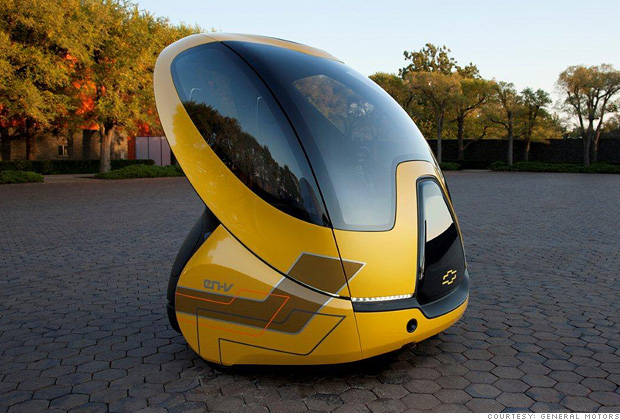
Toyota isn't the only OEM working on mobility on demand.  General Motors has shown a similar sized vehicle, the EN-V, and there have been news reports of a possible demonstration project using this vehicle in China.

We will be watching these mobility on demand systems with interest.

Tuesday, March 26, 2013

11:14 AM

Car2Share - Daimler's Next Move in Mobility


Where have I been?  I must have been asleep at the keyboard when Daimler Innovations launched car2share in Hamburg at the end of January!


At first glance Car2share seems like more or less traditional round trip, fixed parking location, hourly carsharing, but with a bit of Daimler twist.  They've structured their offering with 3 components:

  • Private — direct link to P2P car rental provider AutoNetzer.de
  • Living — Daimler vehicles at a high end residential development
  • Working — Daimler vehicles for corporate customers at an office park in Hamburg-Harburg

The Living car2share places new Daimler vehicles at a new upscale development the Marina at Castle Island (Marina auf der Schloss Insel) and a corporate car2share ("working") at a high tech business park in Hamburg called Channel Hamburg.


The Daimler vehicles included in the service are interesting: the Mercedes B-class sedan (gasoline), a Smart Electric Drive or Mercedes "Vito" E-Cell transporter van (similar to a Sprinter in the US), the latter two EVs recharged by renewable energy.

Rates for car2share vehicle usage is slightly higher but competitve than other German carshares operating in Hamburg:
  Smart Electric Drive € 2.20 per hour + €0.21 per kilometer; daily rate 35€
  Mercedes B-class  € 2.52 + €0.25 per kilometer; daily rate 35€
  Mercedes Transporter E-Cell € 3.92 + €0.29 per kilometer; daily rate 39€
  Monthly membership residential: €19 per month

Businesses pay a monthly membership based on the number of employees signed up:
  Small (up to 10 employees) 39 €
  Medium (up to 25) 69 €
  Large (up to 50) 119 €

Included is gasoline (or electric recharge) and insurance, with a € 500 deductible.


The linkage with German P2P company AutoNetzer.de, which now lists itself as "part of the CAR2SHARE initiative", is really quite remarkable.  

Surprisingly, at least at time this post was written there's far less direct connection with car2go, Daimler's the sister one-way/on-demand carsharing service — beyond the car2go logo appearing at the bottom of the car2share home page.

Best of luck Daimler.  You've scored a hit with car2go, so I'll be interested to see how the partnership with Autonetzer works out, as well your more traditional carsharing offering works.

Saturday, March 23, 2013

2:42 PM

Americans Just Keep Driving Less


Using data through January 2013, Doug Short of Advisor Perspectives, has posted another informative analysis at Business Insider showing we're continuing our downward trend in VMT (vehicle miles traveled) in the US.  

When adjusted for population, we're back to 1995 levels of driving. And, as has been pointed out many places, the decline actually began in 2004-5, 3 years before the big recession.   

Although the VMT is up a fraction (0.24%) over last year, Mr. Short attributes much of the continuing post recession decline to "demographics of an aging population in which older people drive less, continuing high unemployment, and the ever-growing ability to work remote in the era of the Internet."


This chart above shows that gas prices have a very weak influence on driving behavior.   For policy wonks Mr. Short includes an interesting discussion of various considerations in analyzing the data.

All this points to increased interest in carsharing, bicycling and bikesharing systems, walking and transportation alternatives in general, especially in urban areas.  

Mr. Short links to a US PIRG report (PDF) prepared by the Frontier Group detailing the reasons for a relatively shart decline in 16 to 34 year old group - 23% decline in VMT since 2004 - including the much talked about substitution of social networking platforms (i.e. smartphones) for driving. It includes information from the Zipcar millennial survey and discusses implications for future transportation policy in the US.   A slide deck from the report can be found here. 

Friday, March 22, 2013

1:29 PM

The Ides of March

March has been a busy month in the world of carsharing executives, although perhaps not quite as bad as it was for Julius Ceasar:

Zipcar Shake Up — CEO Scott Griffith unexpectedly announced his resignation, immediately after the Avis deal was completed.  He handed the reins over to the COO Mark Norman.  Scott joined Zipcar in 2003, replacing co-founder Robin Chase.
Mark Norman and Scott Griffith in earlier times.
"We’ve built an incredible company; we’ve taken a big idea and turned it into a larger than life brand at the leading edge of an expanding global category; we’ve developed a technology platform that has become the industry standard; we’ve inspired the development of collaborative consumption; and we’ve sparked a major behavior shift in the areas of urban and campus mobility."
Full letter here.

My sense is that Scott had the complicated, and perhaps thankless job, of trying to reconcile conflicting needs major investors, apparently interested in getting their investment, getting the company to a marginally profitable place, and trying to grow the business at the same time.

Although the blogosphere was breathless with early commentators talking about Avis could ruin Zipcar, there's certainly been no evidence to date.  Perhaps the first fruit of the merger has been the announcement of Zipcar at airport locations (!) at all three major airports in in New York City - located in the Avis parking areas, not surprisingly.  The initial batch of vehicles appear to be pretty standard sedans, with no BMWs or lifestyle vehicles (yet).  And they are round-trip cars (must be returned to the airport) and not one-way vehicles, as Hertz On Demand offers between the airports and Manhattan locations.


So best of luck to Mark Norman as he gets to put his own imprint on the next chapter of world carsharing.  And I hope Scott is vacationing in some exotic location while considering his next move. 

RelayRides Departure — Many in the P2P carsharing world may have missed the low-key announcement that founder Shelby Clark made the decision to move on to his next adventure.   He had already been moved into a special role of Chief Community Officer two years ago so the Founders aura had already worn off.   

I had the pleasure to work with Shelby during the early days of RelayRides, working with the initial team to help set up the pilot project in Cambridge and later doing some interesting market research prior to the San Francisco launch.  RelayRides has evolved considerably since these early days and along the way struggled mightily to figure out their technology approach.  A recent announcement celebrating the first anniversary of "going national" (rather than a city by city approach) shows just how far RelayRides has come — cars in all 50 states, 45 times growth in active fleet and reservations hours up 7 times.

Whipcar founders Vinay Gupta (left)
and Tom Wright 
Mysterious Demise of Whipcar — Talk about cryptic, Whipcar announced on Monday, March 12 it was shutting down.  The only explanation they've offered, so far is this:
"However, while so many of you saw the future, we have discovered there are still barriers to widespread adoption of peer-to-peer car rental in the UK. As a small team with limited resources, we have taken a good long look at these scaling challenges. And, after much thought, we have made the extremely difficult decision to close WhipCar. We would like to thank our wonderful community members, our colleagues and our investors for their incredible support over the past three exciting years."
One wonders exactly what the "barriers to widespread adoption" they have in mind?


Some Thoughts — One certainly gets the sense that P2P carsharing may be struggling a bit these days, at least in the North America and the UK.  But I wonder if any new business could meet the heady expectations we all had for P2P in the early days — expanding into the suburbs, putting traditional carsharing companies out of business within a few years, etc.  

Some P2P companies have struggled to find an affordable in-car technology solution that could scale with their hoped for growth, while others have opted out of car technology game altogether and chosen to occupy the P2P car rental niche, instead.

And marketing P2P carsharing is only slightly different than marketing traditional carsharing.  The P2P companies have proved that people will list their cars for rent by others and that only $100-$200 per month income is sufficient reward.   The challenge for all carsharing continues to be getting drivers/renters past the perceived convenience of car ownership continues to be a huge hurdle in a country with  cheap gasoline, low taxes on cars and abundant parking in most places.


Saturday, March 16, 2013

11:04 AM

Communauto in Paris: La guerre, No Sir !

Benoît Robert has been around longer than anyone else in North American carsharing.  As the pioneer founder and now Chief Executive Officer of Communauto, serving Montreal & Quebec City areas, he's seen a lot of changes.

Starting out carsharing in 1994 as a nonprofit (Auto-Com) he grew and made the decision to convert the company to a for profit business structure (described by him in this paper "Developing A Carshare: The Virtues of Pragmatism" published in 2000).

Since then the CommunAuto team has developed effective partnerships with regional transport providers and city governments, (recently announcing a combined transport fare card and vehicle access program.  As a business, CommunAuto has analyzed it's market and created remarkably inexpensive pricing and rate plans unique in the industry (Zipcar and other North American carshares, please take note).   Yet, through careful management it is likely that Communauto is one of the most profitable carshares in North America.  

CommunAuto has been a pioneer in the industry in sharing detailed trip data with researchers in order to develop a much clearer picture of the benefits of carsharing.  And they kept current with developments, including adding battery electric vehicles; announced it close to starting it's own peer-to-peer (P2P) carsharing service; as well as being close to offer a one-way/on-demand/floating parking carsharing service, which they call Libre-Service Intégral (see video at the bottom of this post).

Last year, CommunAuto surprised the carsharing world by acquiring Mobizen (translated link), one of several Paris carsharing companies and has just announced that CommunAuto members can drive Mobizen vehicles (and vice versa).  The following is an editorial written by Mssr. Robert for CommunAuto's newsletter L'echo-Mobile (Oct. 2012) which I think speaks directly to an ongoing problem many carshares face in dealing with the press and community partners.  There's confusion about carsharing in general and between round trip (traditional) and one-way carsharing services.


Communauto has arrived in Paris, what does this mean?

Let’s revisit the facts. On September 11th, Communauto announced the acquisition of Mobizen, the carsharing company previously owned by VeoliaTransdev.

As we stated in our press release at the time, “Our objective is to position the service [so] as to enable it to be a catalyst in reinforcing the offers of Autolib’, public transportation and traditional car rental.” We also pointed out that Autolib’ and Mobizen are “complementary services.”

How was this vision of complementarity interpreted by the media in Paris? These are some of the front- page headlines: 
             “Carsharing wars have begun” (Metro) 
             “Autolib’ has a Canadian competitor” (Figaro) 
             “Mobizen aiming to wrest Paris from Autolib’” (Challenge).

If we hadn’t known that sensationalism is a global scourge, we’d have wondered if we spoke the same language.

Divide and rule

The media aren’t the only ones to blame. In the last few years, several alternative transportation players both in France and elsewhere, particularly in England and the United States, have criticized “traditional” carsharing as they seek their own chance in the sun. So there is a risk that all the efforts in Paris could focus on one-way carsharing services like Autolib’. This would negate the City’s support of local carsharing pioneers since 1999, which would be unfortunate, to say the least.

Why should we be considered traditional? We, out of all people, know that Communauto and companies of the like have tackled the daunting task of changing how people use cars. 

Nothing less!

It’s a hard job and our goal has always been to make carsharing commonplace. When it becomes “commonplace,” “ordinary” or “traditional,” we’ll be the first to celebrate. It will mean we’ve succeeded in making carsharing so popular that it’s become a way of life.

Unfortunately, we still have a long way to go. As industry pioneers, we’ve been persevering for nearly a quarter of a century now. Meanwhile car ownership has continued to increase on a global scale. Hence the importance of establishing links with other players seeking alternative solutions to individual car ownership.

Who benefits from keeping us divided and working individually?

Why go to Paris?

Someone once said, “Forgive them, Father, for they don’t know what they are doing.” We could say the same about the local authorities and how they are currently dealing with carsharing in various countries around the world. A major communication strategy will therefore be required to help decision makers gain a better understanding of what it’s all about and enable them to provide effective support. But our resources are limited...

Communauto’s arrival in Paris is part of this movement. At first we were tempted to stay in our comfort zone. But by doing so, we would have missed the extraordinary opportunity that a city like Paris can offer. It could allow us to broaden our influence beyond our borders and help break down the various obstacles that carsharing still faces.

The main problem is ignorance about the service and the impact of its different variants. It’s too early to criticize a certain approach or limit our options. We need to examine what is being done (including our own efforts) and work together to expand our knowledge in order to optomize the positive environmental impact of our services.

We share a common goal with Parisian authorities: finding the best way of providing a car-based mobility service and minimizing the need for cars at the same time. If we can get community stakeholders to support the idea of an objective approach, the City of Light’s image will help offset our limited communication resources to influence decision makers elsewhere in the world. If that happens, we’ll know we were right to go to Paris!

* This title refers to the acclaimed Quebec novel La Guerre, Yes Sir! written by Roch Carrier in 1968.