Post Top Ad

Post Top Ad

Monday, April 13, 2009

12:44 PM

Promoting Carsharing in Spain

I was honored to be invited as one of several outside speakers at a one-day workshop to promote the growth of carsharing in Spain held recently in Madrid. The more than 60 people who attended came from a wide range of backgrounds — including Spain's only existing carsharing company, Avancar, various government agencies and several start ups in various stages.

Madrid is a city with many beautiful boulevards, as well as neighborhoods with narrow streets and wonderful surprises everywhere. As you can see, it also has it's share of traffic problems. And we were told that the Spanish may have a fascination for cars, and car ownership, approaching that of the USA.

The day began with a wonderful reminder of the connection between land use and transportation from Michael Glotz Richter and a humorous introduction James Bond in Bremen carsharing video. Conrad Wagner continued with a reminder of Traffic... Mobility... Access... that carsharing is one of many options of mobility management and reviewed how Mobility Switzerland had grown nationally and now was able to provide service in many smaller communities, including the partnership with the Swiss postal service.

In my presentation I described the way in which Zipcar, and previously Flexcar, had set a new standard for marketing and defining the carsharing service in terms of a lifestyle choice and not merely as functional transportation option. I emphasized the importance of partnerships with local government and transit agencies, that competition between two carsharing providers was okay and that companies and the government need to think big (the lesson of Velib). I encourage the Spanish government to create national network by setting standards, supporting local providers, providing carsharing options for smaller cities, integrate carsharing with transit & rail

Local perspective came from several speakers including a perspective on the energy saving potential of carsharing, on customer surveys and possibilities of carsharing in the Basque country. Valuable perspective was provided by speakers from Avancar in Barcelona (formerly Catalunya Carsharing), including Pau Noy, one of the founders of Avancar and operational experience from Dirk Bogaert of Avancar, which included a demonstration of the Convadis access system on one of their hybrid Honda Civics so people could get a better feel for the technology.

The final roundtable discussion included a number of questions about marketing, changing peoples habits and about parking - on street, naturally.

The workshop was very well organized by Enrique Huertas and staff of the transportation consultancy Colin Buchanan in Madrid. We hope that they are successful in helping local governments understand the importance of carsharing and that entrepreneurs are able to get support to launch carsharing all over Spain.

Here's a description of the workshop in Spanish ( or a machine translation in English) with links to all the speaker's presentations.And if nothing else, here's a link to my presentation (3.8 mb).
12:14 PM

Sharing and Openness - Robin Chase Thinks About the Future of Transportation


Recently I attended a very interesting talk by one of the founders of Zipcar, Robin Chase, that she gave in Portland during a west coast visit. Her topic was, "How Sharing and Openness Should Play a Critical Role in Our Transportation Future" and it provides a nice framework to think about carsharing and related transportation sharing activities and businesses.

If the topic sounds a little abstract, it was, but only a little. In fact, it's a fundamental concept that we need to get a hold of. In her talk Robin makes the point that we've taken individual consumption of "stuff", including cars, about as far as we can, so it's time to start thinking about these issues in a new way. Her idea is that "collaborative consumption" (sharing) and "collaborative production" (carsharing companies, for example) are an important path to an environmentally-friendly future.

She reminds us that we are rapidly running out of time to address climate change and that each year fail to start seriously addressing it, the chances of avoiding catastrophic outcomes increase significantly. In one of slides I found most meaningful, Robin points out that it will be technology in the service of facilitating behavioral changes that have the capability of making significant cuts in our CO2 from transportation fast - within the next 5 years - and that any impact from electric cars and cellulosic ethanol is many more years further out.

We have a long history of having technology solve our problems and in the long run, it will. But it won't be alt fuels or EVs by themselves, but a real rethinking of our transportation system. (Which in the US, isn't really a system at all - but a car network.)

I know this idea has been pondered by many in the carsharing world but one question I keep coming back to is the idea that there must be some sort of transportation analogue to Google's "open" approach to providing services. Robin's take on this question has to do with open "platforms", as she calls them. She discusses this concept in more detail in this National Journal blog.

Robin has talked quite a bit about this on her blog - Network Musings - which is well worth visiting regularly.

A few days after her talk in Portland she gave a talk covering some of the same topics at the annual meeting of the Association of College & Research Libraries national conference in Seattle. They recorded a nice 20 minute conversation with her that is well worth your time to listen to. Libraries are perhaps the best example of a public "platform" for "collaborative consumption" (to use Robin's terms) .

You can watch Robin's entire talk by in Portland following the link from here. (Be patient the Portland State University system takes a while to get going and the picture quality is marginal.)

Her visit was the first time that Robin and I have met, having started carsharing companies on opposite sides of the country many years ago - and at the time, for me at least, never having thought about them in such a philosophical light. Thanks, Robin, for these wonderful ideas and for permission to post these 2 slides from your talk. Some other slides are included on her musing on the topic.

Friday, April 10, 2009

7:22 AM

Interesting New Developments in the Carsharing Industry

Note: this entry has been updated since its initial posting. - Dave


This week two significant developments in the carsharing industry were announced — the big one being Hertz' acquisition of Eileo, the Paris-based carsharing telematics supplier.

I have always had great admiration for Eileo as they had developed a unique approach to the immobilizer connection, simplifying installation of the car computer. For the past few years Eileo been adding a significant number of carsharing companies to their roster - over 20 in France, and beyond, including the UK, Australia, Israel and recently Hertz and Mind in the US. I counted over 50 "public" services support by Eileo.

And Eileo has developed some innovative capabilities, such as the ability to support floating parking locations. And it should be noted that Eileo has developed telematics in other areas outside of classic carsharing car computer and reservation and administration system. The Eileo website currently lists: a car park solution and a GPS-based fleet tracking solution. And Eileo has continued to support their "tribes" concept, providing free web hosting to encourage several neighbors to start their own informal carsharing, using Eileo car technology, of course.

Hertz has made a wise move, since other companies have demonstrated that you can easily waste millions of dollars thinking you can do a better job developing your own technology. But the Hertz-Eileo combination means that Mint Carsharing in New York City, which also uses the Eileo technology, is going to have to go shopping.

Carpooling or Carshare? Now you Can Have Both

And, in an interesting twist on the transportation alternatives Zipcar announced a partnership with Zimride , a web-based car-pooling service that uses Facebook to help identify potential ride sharers.

Zipcar says it their reservation system will allow users to automatically post the ride on the Zimride site, allowing other registered users to see it and contact the driver. The new carpooling feature, initially to be offered on the Stanford University campus, is sure to be a hit with the many other universities Zipccar serves. It's likely to be a big leg up in exposure for Zimride.

It should be noted that both the Invers and Eileo web reservation systems have long offered a ridesharing option, but only to other carsharing members using that particular service. This collaboration with Zimride will provide an interesting expansion.

Zipcar has already anticipated one potential problem: their website reminds Zip drivers that if Zimriders want to drive cars they must also be Zipcar members. And it will be interesting to see whether the Zip-Zim contributes the not uncommon confusion between carsharing and carpooling is some people's minds or not.

U Carshare Continues Below the Radar

Finally, U Carshare, the other new kid on the block has been quietly putting a few cars on the street. They've just announced Regis College and Viriginia Tech in Blacksburg coming soon. And currently they have cars at Berkeley, California ( 4 vehicles at 3 locations) the University of Wisconsin in Madison (8 vehicles at 7 locations), in my home town Portland, Oregon (see below), and the other Portland in Maine (4 vehicles at 2 locations). In Berkeley, they offer a Ford E-250 van at $15/hour or $109 per day; compared to PT Cruiser at $9 per hour or $65 per day.

In Portland, Oregon, U Carshare now has 10 vehicles, including 8 at on-street parking spaces, all with their signature PT Cruisers. But, so far, their marketing has been non-existent and I really can't figure out why. Word of mouth and free registration can only go so far in attracting new members. So we wonder what U-Haul corporate has up their sleeve - either a very economical stealth growth plan or they're laying the groundwork for something big. We'll wait and see.

Wednesday, April 1, 2009

8:00 AM

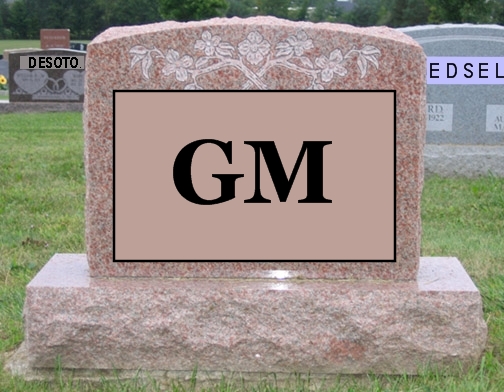
General Motors Sold to Consortium of Transit Agencies


Big news today: As published in today's Wall Street Journal, as part of the recently announced federal bailout package for automakers, control of General Motors has been transferred via receivership to a group of government agencies with expertise in transportation management:

"The once-titan manufacturer's well-known brands and lesser-known operating units will eventually be divided into component parts, but for the time being are held as a single entity designated National Car Lines. Not limited to just GM, government officials briefed on the plan state that NCL is structured as a holding company for the express purpose of acquiring automakers throughout the United States."

What this means for carsharing you can find here.

Thanks to Portland transportation activist and blogger Chris Smith and Portland Transport for this wonderful idea.

Thursday, March 26, 2009

8:55 PM

Car2Go Saddles Up in the Wild West

The next chapter in carsharing in North America is going to be written in Texas. Daimler AG announced that the next city they would test market their innovative Car2Go service would be Austin, Texas. Hardly your prime carsharing territory (although Austin Carshare has been making a go of it).

But then then this is hardly your typical carsharing concept. We're talking on-demand, open-ended, carsharing, allowing one way trips (between stations) using Smart cars (only) presumably at a per minute charge similar to Ulm pilot - 0.19 per minute, 9.90€ per hour and 49€ per day - $26¢ per minute, $13.50 per hour and $66 per day - if prices were translated directly to Austin (which is unknown at this time).

And, of course, it's the first major carsharing operation directly funded by an auto manufacturer, in this case Daimler, which is looking for new business opportunities in the face of radically different environmental and economic future. Here's the car2go promotional video with English titles


We can only hope that Daimler is planning to fund some serious evaluation studies on the usage and impact of car2go since the implications of a such a service are staggering. What is the competition for this service? What trips will it replace? How many Texans want to drive a Smart car? How much will it compete with traditional carsharing (my guess is not too much - as the Smart car itself may be the limiting factor)?

At the public bicycle session I moderated at TRB this year I was exposed to a concept I hadn't fully gasped before - personal public transportation. Previously, my concept of "public transportation" was group transportation (i.e. buses, trains, trams, etc.) but Velib and other public bicycle systems, being funded by local governments, have effectively defined a new niche - personal public transportation - publicly owned, but serving one person at a time in a socially-responsible manner. The Car2Go concept could be viewed as such a service - public and personal - only with a motor vehicle, albeit a specialized one - the unique, fuel-efficient Smart car.

If you'd like to understand more about what Daimler is thinking about in creating the car2go concept, they've posted a 5 minute video (in English) from an October 2008 press conference with several people from the Daimler Business Innovations Group describing the concept.


They've got a lot to do between now and projected fall launch. (Full disclosure, I've been involved with the German consulting firm, Team Red, to help get this project get off the ground.)

In conclusion I can't resist including one of their publicity shots. I doubt it will get any Texans off their horses and on to cow2go!

As ex Presidente (fortunately not for life) George Bush (who lives only 90 miles, but light-years) away from Austin said, "Bring 'em on"! Yee ha!

Saturday, March 14, 2009

2:48 PM

Flinkster - Germans Take a Page From the Zipcar Playbook


DB, theDeutsche Bahn, the German railroad operator, has been actively branching out from moving people on rails, offering carsharing (DB Carsharing), car rental (DB Rent) and even bike sharing (Call a Bike) in many German cities. Now they've created another service and another brand, with a unique service model - a hip carsharing service that appears to take it's queue from Zipcar - called Flinkster.

After several months of rumors, Flinkster finally launched in Stuttgart last week, while the launch in Köln announced but, as yet unspecified. Early reports indicated it was going to be similar to the "floating fleet" concept by Daimler of car2go in nearby Ulm, Germany, which would allow vehicles to be parked anywhere in the downtown area. But with actual launch, there's no indication that Flinkster is anything more than a hip version of classic carsharing. Flinkster is actively seeking parking places in these cities and will pay a bounty of membership, usage or even a 2nd class rail pass for parking spaces. Interestingly, the maps provided on the Flinkster website are the DB Carsharing maps and list all vehicles at a location - with Flinkster appearing as one of several classes of vehicles at a location. Here's an early map of the "floating fleet" area, now nowhere to be found on the Flinkster web site. Instead,

The best rate offered by Flinkster is € 1,50 + € 0,25 per kilometer (the equivalent in US dollars of $2 per hour + 20¢ per mile). In comparison, the standard rates for Cambio Carsharing in Cologne charges € 1,70 per hour + € 0,31 per km. But Flinkster's "occasional user" rate actually makes them the highest in Stuttgart according to a comparison done by German carsharing blog. Flinkster offers an increased insurance coverage of € 4 per trip or € 10 per month - reducing the deductible from € 1000 to € 300 per accident.

Cambio reported has about 250 vehicles and over 7,000 members in the city. In one news report Cambio spokesperson is quoted confidently stating, "About Flinkster we are relaxed, our biggest competitor is still car ownership." True, but...

In an interesting move, Flinkster partnered with Alfa Romeo, but not to provide sports cars, but a very nice 2 door, 4 seat sedan, the MiTo, equiped with Bluetooth and CD/mp3 players to appeal to the youth demographic DB says it's after. They emphasize that vehicle meets the strict Euro 5 CO2 standard.

For what it's worth, the name Flinkster was created by a real marketing person. "Link" in German has a similar meaning in English. "Flink" in German means quick and the "ster" (as in "friendster" or "hipster") to make the whole thing personal and cool - sort of "Quick-link-ster"

Perhaps DB wanted to get Flinkster launched and will implement the "floating fleet" concept at a later time (the operational challenges are significant). Otherwise, it seems strange to create a separate brand, especially one that seems likely to cannibalize customers from DB's existing carsharing and rental car services as well? It's worth remembering that for the past decade Germany has been allowing competition in passenger rail service and there are many other regional passenger rail operators, such as Metronome, that offer service renting DB tracks. So it appears that DB has gradually been trying to position itself as an all-around mobility provider, as well as providing rail passengers with the convenience of "combined mobility" (a concept that was first gained prominence about 20 years ago (in an early Swiss carsharing report, "Carsharing - the key to combined mobility").

We will watch with interest. The times they are a changin'.

Saturday, March 7, 2009

4:09 PM

A New York Perspective on (Car)Sharing and some history, as well


Sunday's New York Times has a very nice article about carsharing, including a little history of yours truly, as well as Zipcar founder Robin Chase. I think the author Mark Levine has done a nice job telling the story, but then I'm biased since I'm quoted.

Something else the article talks about is the differing views of for-profit and nonprofit carsharing companies. Rick Hutchison of City Carshare is certainly right in saying that carsharing (in it's present form at least) is a low margin business. All companies have been struggling valiantly to increase profit margins since the day they started - for-profits to deliver returns to their investors and nonprofits to avoid rate increases (or maybe even lower rates if they got really big). The entry of car rental companies onto the field suggests they've also run the numbers and think it's not as low a margin business as it appears. My view is that there's room in most, if not all cities, for both for-profit and nonprofit carsharing. After all, less than 1-2% of people living in most neighborhoods served by carsharing are members, so it's not as if there isn't huge potential. In the short run, either one or the other company might give up or they differentiate themselves sufficiently to attract different customers.

I particularly liked this anecdote from Zipcar founder Robin Chase quoted from the article) because it gets to the heart of the dilemma about carsharing:

She and [business partner Antje] Danielson came up with a list of five potential names for the company, and Chase walked around Boston asking people on the street for their reactions. “Antje really wanted to do ‘Wheelshare,’ ” she says, “but that seemed too close to ‘Wheelchair.’ Then we tried ‘U.S. Carshare.’ That was how I learned that 40 percent of the people I talked to had an extremely negative reaction to the word ‘sharing.’ The word makes people nervous. They feel they’re being scolded or told to wait their turn. At that point I banned my staff from using the phrase ‘car sharing.’ Do we call hotels ‘bed sharing’? That’s way too intimate. Do we call bowling ‘shoe sharing’? Who would want to bowl?” Chase landed on the name Zipcar, accompanied by the slogan “Wheels When You Want Them.”


Since we're talking about history, here are some more screen shots from early Zip and Flex web sites (courtesy of WaybackMachine.org). As with Zipcar, Flexcar under founding CEO Neil Peterson, CEO of Flexcar, would avoided the "S" word.


Flexcar's first site hit cyberspace on May 10, 2000 and Zipcar's a few weeks later on June 21. Flexcar stuck with their "Shift Your Thinking" slogan until Revolution LLC came on the scene in 2006 and they decided that "sharing" wasn't a problem and declared themselves to be "the car-sharing company" as well as "the nation's first and best carsharing company".


Both Flex and Zip web sites underwent major upgrades in 2002, with Flexcar losing the orange in the X (apparently in a dispute with Cingular cell phone company which had a remarkably similar image at the time.


That same year Zip tried out another car logo...

...until they came up with their current Z version.

Here's City Carshare in the "old days", also back in 2002.

Sorry, no iconic green VW Beetle on their home page at the time. (Comically, Zipcar actually threatened City Carshare with legal action claiming that Zipcar had trademarked the green Beetle, even though CityCarshare started using them first.)

And to complete our little historical romp, although the original CarSharing Portland website isn't available, here's what the original brochure looked like (circa 1998):

Enough nostalgia. Onward.