Post Top Ad

Post Top Ad

Saturday, August 1, 2009

1:48 PM

Hertz Connect Rolling Out New Cities


The new carshare on the street, Connect By Hertz, is showing it means business. After the initial launch in Manhattan, London and Paris, Connect spent some time getting their feet on the ground. But they were busy in the spring and by this summer Connect had expanded their New York fleet to over 400 hundred vehicles - competing in Zipcar's sweetest neighborhoods all over Manhattan. The growth was facilitated by their partnership with Icon Parking, Connect now has locations from the tip of Manhattan up to East and West 90th Streets. In comparison Zip has over 2000 vehicles in several boroughs and adjacent New Jersey communities).

A recent check of the Hertz Connect web site now lists Boston, Chicago, Washington DC and San Francisco, each with one location with several vehicles. In Chicago, for example, the downtown Loop location has 4 vehicles - 2 Priuses, a Ford Escape SUV and a Camry. (The Washington DC location is at Marriot hotel corporate headquarters and could be laying the groundwork for a very interesting partnership.) Oddly Denver isn't one of the cities listed, although the Spire condo project there indicates they'll be offering residents Connect services. That would make Denver the city with the most carsharing services right now - E-Go (Boulder Carshare), Occasional Car (a recent start up with 2 vehicles) and Hertz Connect.

And Connect has added a couple of college/university campuses to its list - having taken them away from Zipcar. These are naturals for Connect since Hertz likely has a branch in the town so adding carsharing is a piece of cake.

But exactly how they're achieving this growth is a bit of a mystery - since they don't seem to be using any of the traditional marketing approaches - transit advertising, media trade outs, etc. They have done some interesting awareness campaigns using Go Gorilla Media including sidewalk logo projections, sidewalk stenciling (is that legal?) and fake "lost dog" signs (the tear offs give the Hertz Connect web site).
Hertz Connect is going after a somewhat different customer demographic - offering more vehicles on the upscale end. In addition to a Mini or a Prius at just about every location, and the usual assortment of Mazda 3s and Toyota Yaris, there are many Camrys and some locations have Volvo C70s and even a Mercedes GLK 350!

Hertz Connect is being helped in NYC by Zipcar's on-going problems with customer service. The Zipcar call center can be infuriating (I know from experience) and fleet maintenance in NYC (and other cities) apparently leaves a LOT to be desired - read a bunch of uphappy Zipcar members complaining (and very few members complimenting) on Yelp.

The London and Paris operations of Connect remain mysteries with only minor expansions of the fleet. But perhaps that's not surprising because Zipcar has been having trouble figuring out the UK market and they've been in London and LOT longer than Hertz Connect. And speaking of mysteries, Mint in New York, is another mystery - very little action since their launch.

And while I'm on the subject of car rental companies operating carsharing, it's worth nothing that U-Carshare by U-Haul has been quietly adding additional cities and a couple of schools, as well. That said, the U-Carshare marketing strategy is also a mystery - almost invisible in my home town of Portland, Oregon (although they finally had a presence at the recent Sunday Parkways event I wrote about earlier).

It's shaping up to be an interesting year in carsharing.

Friday, June 26, 2009

3:49 PM

Getting from A to B and transforming transportation along the way


Eric Britton, Robin Chase and others have written eloquently about the urgency for making massive changes in our transportation system. What will offset a big chunk of that car use is pretty clear: a lot more walking and cycling, increased use of public transportation, ridesharing, plus a dash of carsharing!


My guess is this will probably involve some high tech solutions - cell phones and social networking services, electric bikes, etc. - but mostly it's going to be a lot more old fashioned shoe leather and bike tires on the pavement. But right now we have a lot of wonderful solutions and a big gap between what we're doing and where we want to be.


But what combination of factors will motivate a large number of people to change their these transportation habits is a mystery. Carsharing is indeed a "missing link", but it's only one of a number of "missing links" in the chain.


Recently, the City of Portland is sponsored the latest in a series of Sunday Parkways bike rides, attracting thousands of people, families, and kids for a ride through several neighborhoods. Cross streets are controlled and it's a veritable party attracting thousands of people over a 5+ mile circular route. The other part of event is scheduling community groups, food vendors and musicians of all kinds to set up in the parks along the route. It is truly inspiring to see so many people on bikes and it seems can't help create awareness and experience of cycling in a broader section of the population than the "hard core bike commuters". It's a small, but I think important step in the cultural shift in our thinking and transportation habits. You can see a nice Streetfilms video of the first event last year here.


The start of such a shift was reflected in an interesting essay by a Canadian newspaper columnist who characterized the change in the change in their attitude about cars from "object of desire" to "necessary evil". I think this captures one of the cultural shifts perfectly - for so many people cars are now becoming a necessary evil.


Another cultural shift I've been thinking about could be a basic change in the type of cars we own - instead of the maximum car we can afford, we would spend our money on the minimal car we need for 90% of the trips we take. This minimal car wouldn't have to be a "econobox". Daimler has shown there's a market for a $15,000 city car and Europe has got a wide variety of upscale microcars! For now, car ownership in the US is probably too cheap and awareness of the impacts of ownership too limited to see this happening very much.


What's needed now is some good minds to think about the intermediate steps to facilitate this cultural shift and conditions to promote them. With the passage of climate change legislation in the US and a new commitment to addressing environmental problems, the next decade is going to be interesting.

Sunday, June 21, 2009

4:54 PM

Carsharing in India

My postings has always been sporadic but none more so than recently. My wife and I were on a 3 week trip to India - our first ever - and it was a stark reminder that most of the rest of world operates under conditions a lot more basic than our gold plated lifestyle. I was also struck by the progressive policies (a ban on plastic bags in Himachal Pradesh for example) and active discussion about climate change in the newspapers.

The transportation system in India was already at capacity - trains were long and very crowded; buses were packed for 12 hours a day; roads were narrow, bumpy and travel was slow. And we could see that even relative prosperity was resulting in rapid expansion in the number private cars - not only the local brands - Maruti Suzuki and Tata but also the traditional "Asian" brands like Honda, Toyota and even new brands like Hyundai, Honda, Toyota and Chevy (!) were in evidence.

For better and worse, the Tata Nano, the $2000 car, has captured the imagination of world. But there were lots of other awfully-darn-small cars already in India, as well as the infamous autorickshaws everywhere. The good news about these autorickshaws in Delhi, at least, is that the city has mandated that all of them, and all buses, be converted to compressed natural gas (CNG).

Remarkably in the few weeks we were there I came across this op ed piece from the Times of India that mentioned carsharing - Can India Really Afford Cheap Cars? by Martin Wright, the editor of the UK-based Green Futures magazine. In the discussion the author wonders if an battery electric Tata Nano would be possible possible and then goes one step further:

You might not be able to afford an electric Nano — but why own something that you don't use every day? So what about a state-sponsored Tata Zero Carbon Car Club, of the sort springing up across European neighbourhoods, giving people the benefits of using a vehicle when they need it, without the hassle and cost of owning one when they don't? It could help cut congestion, too: all the evidence suggests that car club members drive less than private car owners — because they don't feel they have to justify their hefty investment in their vehicle by using it in preference to the bus or metro.


It's worth remembering that India has some street cred in the alternative transportation sector as well - it's the home to the Reva EV (sold in the UK as the G-Wiz). For now most of the carsharing going on in India will continue to be taxis! But what next?

Monday, April 13, 2009

12:44 PM

Promoting Carsharing in Spain

I was honored to be invited as one of several outside speakers at a one-day workshop to promote the growth of carsharing in Spain held recently in Madrid. The more than 60 people who attended came from a wide range of backgrounds — including Spain's only existing carsharing company, Avancar, various government agencies and several start ups in various stages.

Madrid is a city with many beautiful boulevards, as well as neighborhoods with narrow streets and wonderful surprises everywhere. As you can see, it also has it's share of traffic problems. And we were told that the Spanish may have a fascination for cars, and car ownership, approaching that of the USA.

The day began with a wonderful reminder of the connection between land use and transportation from Michael Glotz Richter and a humorous introduction James Bond in Bremen carsharing video. Conrad Wagner continued with a reminder of Traffic... Mobility... Access... that carsharing is one of many options of mobility management and reviewed how Mobility Switzerland had grown nationally and now was able to provide service in many smaller communities, including the partnership with the Swiss postal service.

In my presentation I described the way in which Zipcar, and previously Flexcar, had set a new standard for marketing and defining the carsharing service in terms of a lifestyle choice and not merely as functional transportation option. I emphasized the importance of partnerships with local government and transit agencies, that competition between two carsharing providers was okay and that companies and the government need to think big (the lesson of Velib). I encourage the Spanish government to create national network by setting standards, supporting local providers, providing carsharing options for smaller cities, integrate carsharing with transit & rail

Local perspective came from several speakers including a perspective on the energy saving potential of carsharing, on customer surveys and possibilities of carsharing in the Basque country. Valuable perspective was provided by speakers from Avancar in Barcelona (formerly Catalunya Carsharing), including Pau Noy, one of the founders of Avancar and operational experience from Dirk Bogaert of Avancar, which included a demonstration of the Convadis access system on one of their hybrid Honda Civics so people could get a better feel for the technology.

The final roundtable discussion included a number of questions about marketing, changing peoples habits and about parking - on street, naturally.

The workshop was very well organized by Enrique Huertas and staff of the transportation consultancy Colin Buchanan in Madrid. We hope that they are successful in helping local governments understand the importance of carsharing and that entrepreneurs are able to get support to launch carsharing all over Spain.

Here's a description of the workshop in Spanish ( or a machine translation in English) with links to all the speaker's presentations.And if nothing else, here's a link to my presentation (3.8 mb).
12:14 PM

Sharing and Openness - Robin Chase Thinks About the Future of Transportation


Recently I attended a very interesting talk by one of the founders of Zipcar, Robin Chase, that she gave in Portland during a west coast visit. Her topic was, "How Sharing and Openness Should Play a Critical Role in Our Transportation Future" and it provides a nice framework to think about carsharing and related transportation sharing activities and businesses.

If the topic sounds a little abstract, it was, but only a little. In fact, it's a fundamental concept that we need to get a hold of. In her talk Robin makes the point that we've taken individual consumption of "stuff", including cars, about as far as we can, so it's time to start thinking about these issues in a new way. Her idea is that "collaborative consumption" (sharing) and "collaborative production" (carsharing companies, for example) are an important path to an environmentally-friendly future.

She reminds us that we are rapidly running out of time to address climate change and that each year fail to start seriously addressing it, the chances of avoiding catastrophic outcomes increase significantly. In one of slides I found most meaningful, Robin points out that it will be technology in the service of facilitating behavioral changes that have the capability of making significant cuts in our CO2 from transportation fast - within the next 5 years - and that any impact from electric cars and cellulosic ethanol is many more years further out.

We have a long history of having technology solve our problems and in the long run, it will. But it won't be alt fuels or EVs by themselves, but a real rethinking of our transportation system. (Which in the US, isn't really a system at all - but a car network.)

I know this idea has been pondered by many in the carsharing world but one question I keep coming back to is the idea that there must be some sort of transportation analogue to Google's "open" approach to providing services. Robin's take on this question has to do with open "platforms", as she calls them. She discusses this concept in more detail in this National Journal blog.

Robin has talked quite a bit about this on her blog - Network Musings - which is well worth visiting regularly.

A few days after her talk in Portland she gave a talk covering some of the same topics at the annual meeting of the Association of College & Research Libraries national conference in Seattle. They recorded a nice 20 minute conversation with her that is well worth your time to listen to. Libraries are perhaps the best example of a public "platform" for "collaborative consumption" (to use Robin's terms) .

You can watch Robin's entire talk by in Portland following the link from here. (Be patient the Portland State University system takes a while to get going and the picture quality is marginal.)

Her visit was the first time that Robin and I have met, having started carsharing companies on opposite sides of the country many years ago - and at the time, for me at least, never having thought about them in such a philosophical light. Thanks, Robin, for these wonderful ideas and for permission to post these 2 slides from your talk. Some other slides are included on her musing on the topic.

Friday, April 10, 2009

7:22 AM

Interesting New Developments in the Carsharing Industry

Note: this entry has been updated since its initial posting. - Dave


This week two significant developments in the carsharing industry were announced — the big one being Hertz' acquisition of Eileo, the Paris-based carsharing telematics supplier.

I have always had great admiration for Eileo as they had developed a unique approach to the immobilizer connection, simplifying installation of the car computer. For the past few years Eileo been adding a significant number of carsharing companies to their roster - over 20 in France, and beyond, including the UK, Australia, Israel and recently Hertz and Mind in the US. I counted over 50 "public" services support by Eileo.

And Eileo has developed some innovative capabilities, such as the ability to support floating parking locations. And it should be noted that Eileo has developed telematics in other areas outside of classic carsharing car computer and reservation and administration system. The Eileo website currently lists: a car park solution and a GPS-based fleet tracking solution. And Eileo has continued to support their "tribes" concept, providing free web hosting to encourage several neighbors to start their own informal carsharing, using Eileo car technology, of course.

Hertz has made a wise move, since other companies have demonstrated that you can easily waste millions of dollars thinking you can do a better job developing your own technology. But the Hertz-Eileo combination means that Mint Carsharing in New York City, which also uses the Eileo technology, is going to have to go shopping.

Carpooling or Carshare? Now you Can Have Both

And, in an interesting twist on the transportation alternatives Zipcar announced a partnership with Zimride , a web-based car-pooling service that uses Facebook to help identify potential ride sharers.

Zipcar says it their reservation system will allow users to automatically post the ride on the Zimride site, allowing other registered users to see it and contact the driver. The new carpooling feature, initially to be offered on the Stanford University campus, is sure to be a hit with the many other universities Zipccar serves. It's likely to be a big leg up in exposure for Zimride.

It should be noted that both the Invers and Eileo web reservation systems have long offered a ridesharing option, but only to other carsharing members using that particular service. This collaboration with Zimride will provide an interesting expansion.

Zipcar has already anticipated one potential problem: their website reminds Zip drivers that if Zimriders want to drive cars they must also be Zipcar members. And it will be interesting to see whether the Zip-Zim contributes the not uncommon confusion between carsharing and carpooling is some people's minds or not.

U Carshare Continues Below the Radar

Finally, U Carshare, the other new kid on the block has been quietly putting a few cars on the street. They've just announced Regis College and Viriginia Tech in Blacksburg coming soon. And currently they have cars at Berkeley, California ( 4 vehicles at 3 locations) the University of Wisconsin in Madison (8 vehicles at 7 locations), in my home town Portland, Oregon (see below), and the other Portland in Maine (4 vehicles at 2 locations). In Berkeley, they offer a Ford E-250 van at $15/hour or $109 per day; compared to PT Cruiser at $9 per hour or $65 per day.

In Portland, Oregon, U Carshare now has 10 vehicles, including 8 at on-street parking spaces, all with their signature PT Cruisers. But, so far, their marketing has been non-existent and I really can't figure out why. Word of mouth and free registration can only go so far in attracting new members. So we wonder what U-Haul corporate has up their sleeve - either a very economical stealth growth plan or they're laying the groundwork for something big. We'll wait and see.

Wednesday, April 1, 2009

8:00 AM

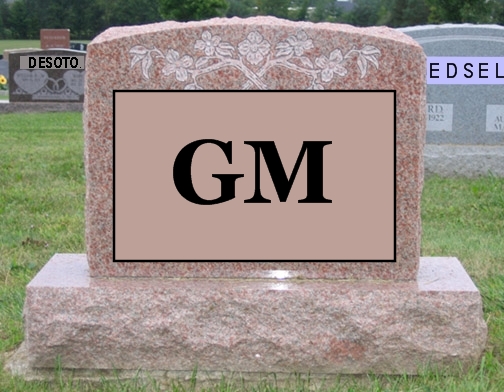
General Motors Sold to Consortium of Transit Agencies


Big news today: As published in today's Wall Street Journal, as part of the recently announced federal bailout package for automakers, control of General Motors has been transferred via receivership to a group of government agencies with expertise in transportation management:

"The once-titan manufacturer's well-known brands and lesser-known operating units will eventually be divided into component parts, but for the time being are held as a single entity designated National Car Lines. Not limited to just GM, government officials briefed on the plan state that NCL is structured as a holding company for the express purpose of acquiring automakers throughout the United States."

What this means for carsharing you can find here.

Thanks to Portland transportation activist and blogger Chris Smith and Portland Transport for this wonderful idea.